Author Archives: Carroll

Trusting the Lord

During the time of lamenting and second-guessing myself, the Lord got my attention, and I realized I lacked trust in Him. I preached to the children about the trust we can have with the Lord, yet I faltered as I thought of my responses about Sara*. Three different people came forward and shared words of encouragement with me. None of them knew to the extent that my mind twisted and turned about the responsibility I brought upon the Home. They said that Sara would find the Lord Jesus Christ as her Savior. She would find love and security that she never knew before living with us. All three people spoke the same words at three separate times. I may not have understood all of the “whys,” but God had a plan, and I needed to trust the Lord with Sara’s life. He showed me that when I recognized my weakness, then He could work through the situation with His might and wisdom. I surely recognized my weaknesses. Forgive me, Lord, for my doubts, and help me to trust you more. 

People scheduled to help with dialysis, which we administered four times a day. We sectioned off and sanitized a little room for Sara’s medical supplies and treatments. We learned to record the amount of fluid drained from her, the amount of fluid input, her temperature, and any external visible signs. My missionary friend Dannie sent me a list of signals to watch for that would indicate an emergency. Checking for signs of swelling, weakness, sleeping more than usual, white around the lips, or coughing kept us on alert. But each day became more complicated with her death wish. One time, Sara cut the dialysis cord to her abdomen, and we rushed her to the emergency room. There were times she refused to eat, thinking that she could starve herself to death. But God had a plan, and our little team gathered together in prayer for her. During our turns administering dialysis, we planted seeds of hope and love into her heart. I spent many hours with her during dialysis and saw her emotional pain. She viewed herself as garbage. Her tears and wild responses showed me the deep fear she tried to hide. I felt myself becoming more protective of her. Gradually, I could see the walls starting to crumble.

The judge who gave us custody of Sara asked if we could find someone in the States who would adopt her. She wanted Sara to have the possibility of a kidney transplant and saw this as a solution. The thought startled me, because I couldn’t imagine anyone adopting a child with such a difficult medical history. I had more to pray for but could see this as a possibility for Sara’s life.

“Sara, did you know that God created you with a plan and a purpose for your life before He created the world?” Her fingers wove in and out of my blonde hair, which all of the kids liked to do, but the strange look I received told me she did not know this. I read Psalm 139 to her. “Sara, God doesn’t make mistakes, and even though we don’t understand all that is going on in our lives, we know that He created us for something good. How would you feel about being adopted, going to the States to be a part of a family, and having a kidney transplant?” I really didn’t know what to expect but was surprised at such quick negativity. “No!” she muttered turning away from me.

One of the requirements in the adoption process was the approval from Sara. What can we do to change her mind? How can we help her see the benefits of adoption? I said the words out loud many times: God has a plan all worked out for Sara. We were in the dark as to where He would lead her, but I trusted in Him.

*Name has been changed.

No Will to Live

I received a call from the court for a young girl ready to leave the hospital. Although I had difficulty understanding Spanish over the phone, I did pick up the idea that this girl had kidney problems. Without thinking about what I said, the word “yes” jumped out of my mouth. We would take her into the Home. Then I stood on the outside steps, after the conversation, in shock of what I had just committed to. Lord, this physical problem will require more than what we are able to do. Why did I say yes? For whatever reason, I felt that Sara* needed to live with us. Father, I will be obedient to this, but You will need to work out all of the details.

She stood before me with short black hair, dark eyes that lacked luster, chubby cheeks, and a distended abdomen. I ached to hug her and ease some of the pain I saw in her eyes, but when I tried, she pulled back. Lord, this one has been deeply hurt and needs to feel Your love and touch. “Sara, I am Mama Carroll, and this is your new home. There are several girls living here, and we are all part of a family. You are now part of that family too.” She responded with a slight smile. This one had walls around her heart.

Sara’s doctor sent some medication, bags of dialysis liquid, and instructions for doing the dialysis. Totally new to me, I ventured into a medical realm that I never wanted to be a part of. I would learn what I needed to help this ten-year-old girl. I could only imagine the suffering she had endured when her mother abandoned her in a hospital with the diagnosis of kidney failure. From there, Sara went to an orphanage that neglected her physical needs, and the consequences put her back into the hospital. Sara’s doctor wanted to adopt her as her own, but circumstances prevented that from happening. Rejection after rejection permeated the life of this little one, to the point that she didn’t even want to live. Could we break through those walls? Would we be able to provide the necessary medical care, which included dialysis four times a day? We don’t have any medical training to deal with peritoneal dialysis. I didn’t regret my decision to bring her into the Home, but I did know we could be facing dire circumstances if we couldn’t keep up with her medical needs. Driven to my knees, I pleaded with the Lord to make a way for Sara to live with us in health and in love.

Joanne met with Sara’s doctor, and the information she gave indicated that Sara could die at any time, and we needed to be prepared for it. Three of Sara’s friends from the hospital, who were on dialysis for one and a half years, had passed away. That would put Sara next. I wanted to shout out in protest, but instead I listened to the need for a plan if this were to happen. How would we deal with the other children? Dying wasn’t in my thoughts when I agreed to her coming to Shadow.

Legally, we would be responsible for any funeral and burial arrangements. We knew nothing about the Guatemalan regulations other than it all had to take place within seventy-two hours of her death. Joanne proceeded to get all of the information and planned to see about purchasing a cemetery plot. Meanwhile, I second-guessed my decision for her to live with us.

The children in the orphanage were familiar with death, because in this country, it is all around them. But we needed to protect them. I put us into this responsibility because of the decision I made about Sara. Lord, more than ever I need Your help with wisdom and the ability to take care of Sara. Please guide us in a plan for when Sara passes into eternity. if it happens, we need help so the children can adjust to such a painful event.

Family Blending

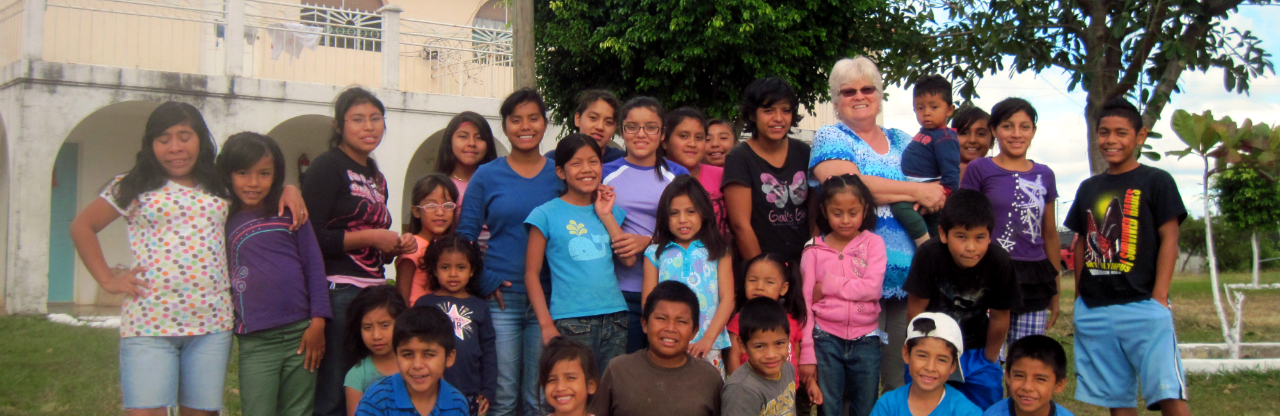
Outside circumstances added the red hot pepper to the chili, so to speak, but real life took place within the walls of the orphanage. With the addition of each child, the blending of a family became more difficult. Each girl had her own baggage, but the needs were similar. They hungered for love and a sense of belonging. Lord, help me to show Your love to these girls and that we are a family.

“Mama Carroll is my mother, and I am the only one who can call her Mama,” Leti* announced one evening at the supper table. Paola* jumped up and ran crying into the bedroom. Leti sat with a satisfied grin on her face. I went to Paola, denouncing what Leti said and assuring her of my love for her.

Xiomara* would strike out at Paola whenever she thought nobody saw her. Lorena* confided that she might be pregnant because she vomited and her breasts ached. The timing of when she came to us would make this a possibility. We faced all these issues and more on a daily basis.

I cringed at the possibility that Lorena might be pregnant. We didn’t establish an orphanage with this possibility in place. She would have to go to another Home where her needs would be met. Oh, Lord, she has adjusted well here, and what would happen to her younger sister? This issue needed to be addressed now. I quickly went to the pharmacy and purchased a pregnancy kit. We thanked God when the test showed negative.

Dealing with Xiomara proved interesting as well. “She’s a liar, I didn’t steal anything,” shouted Xiomara* at Mari*. The directors of the school had a different story, and the implications were clear. I knew that Xiomara came from a crime-ridden area in the City. Notorious for its violence, we gringos avoided going there except for special ministry. The behavior of this girl showed that environment’s influence. She lied, stole, hit, fought, and swore. Our work was cut out for us, and I could understand why her parents had put her in the orphanage.

One afternoon, after Xiomara had been disciplined for her negative actions, she manifested by passing out. Her hands went cold, and her lips swelled and looked distorted. She scared all of the staff when she shouted, “Death is at my feet; oh death is at my feet.” This reeked of a drama-queen thing, but because of the physical signs, Joanne and I decided we needed to take her to the doctor. A missionary nurse came to analyze the situation and confessed that she was leaning toward drama queen, but it would be safer to have a doctor check her out. Meanwhile, we prayed for her deliverance, and within an hour she looked and acted normal. After her appointment, the doctor reported that he couldn’t find anything physically wrong.

Our little family struggled, but with the time invested from the staff and missionaries around me, we saw progress. Each situation was dealt with and sometimes repeatedly so. The children received the daily devotions and times of prayer with an openness that amazed me. Learning of the Lord Jesus Christ and His love for them moved them to tears.

“Paola, I’m sorry I slapped you. Please forgive me,” whispered Xiomara as she moved in for a hug. We had come together before bedtime, and something moved over the girls with a need to repent and ask for forgiveness from those who had been wronged. Oh, Lord, this is music to my ears. Keep touching their hearts with Your love. This makes all that we have gone through worth it.
*Name has been changed.

More Men With Guns

Who would have guessed that there would be another adventure with men and guns?

The “Hawaii Five-O” scene played out when a shiny sports car zoomed up within inches of the front gate of the orphanage. Out jumped two men wearing black pilot-type sunglasses and dressy business suits. They adjusted their jackets as they scrutinized the area, as if they expected to be attacked at any moment. The cook and I watched from the kitchen window, puzzled, but immediately concerned. We hadn’t been notified of anybody coming for a visit. Were they coming to the orphanage? A tapping on the gate with keys answered that question, so with a prayer, the cook and I went to the gate. One of the men said they wanted to see one of the children—Lila*. I explained that the children were in school, but they insisted on coming into the house anyway. No way am I letting you past this gate. They must have heard my thoughts because one of the men handed me a court document giving them permission to come visit the orphanage. I had to honor the order. They came into the kitchen and looked into the living room, as if they were checking out a place for rental. It confused me, because I didn’t know what they were looking for, and they didn’t say a word. One went down the hall to the bedroom, and the other one leaned forward looking out the picture window. A bulge of his gun showed under his jacket. It set my heart racing. Were they mafia or drug lords? Keep us covered with your protection, Lord. I knew that if one had a gun, so did the other. However, after the quick perusal around the house, they seemed satisfied with what they saw. They said adios and left as quickly as they came. That stirred the cook and me up really well that day, but the story wasn’t over.

We kept the official document that gave these men permission to see the child, and it turned out to be a forgery. The court had no record of this document. A few weeks later, the court called for an audience and requested that we bring Lila in on a particular day. The man who had given me the false document turned out to be the child’s uncle, and he spoke English. He sure didn’t use it at our first visit. The judge acted as if the false document didn’t exist. In the process of the court audience, the judge stated that the uncle would be given custody of Lila. After the audience, I went over to him and asked him why he lied to me with the forged paper. He just smiled, took the hand of his niece, and left. I felt thankful that no harm had come to anybody, but I was disturbed at the wide range of corruption in this country and its affect in the lives of the children. This may or may not have been a case of bribery, but it added another dimension to what we faced in the work of the orphanage.

Thankfulness filled my heart for God’s protection. This story could have gone in a different direction, but we put God in control, and He proved His faithfulness to us once again. I grew in trust with each experience, and there were many more coming my way.

*Name has been changed.