Misunderstandings of UNICEF’s deinstitutionalization have caused the neglect of rights for some Guatemalan children. Instead of putting children into a safe refuge, the courts send them back to the same environment at the time of the rescue. They believe they are following the process described by UNICEF. Known for their advocacy for children worldwide, this organization’s influence upon the court systems promote steps going backwards.
This UNICEF takes a stand against institutions for orphaned or needy children. Through their investigations and studies, they state the following: “The more we learn about the brain and how it is negatively affected by the environment in which children grow, the stronger the evidence that children should not be placed in institutions — and children under 3 in particular, should never be placed in an institution. There is increasing evidence that not only does the brain fail to develop fully in children in institutions — but parts of the brain actually die — and this is not reversible.”1
The deinstitutionalization process closes down orphanages and children’s institutions, and then moves these children into a family environment. It sounds good on paper, but the Guatemala Children’s Court judges follow the advice without completely understanding what defines an institute and what they are not. They follow the goal to move a child out of the institution (according to their definition) within a few months from the time the child enters. Two distinct problems arise.
The first situation focuses on the course of action taken on behalf of each rescued child. In Guatemala, each child legally receives three audiences with a judge, a family member of the child, a court social worker, a psychologist, a human rights person, and representatives from the residence the child is residing at the present time. The first audience presents the status of the child, any known information, and what necessitated the rescue. The judge examines this information and delegates further investigation accordingly. The second audience brings any new findings before those present. After a discussion, the judge again designates others for further investigation with the decision for custody being made at the third audience.
With an overloaded and under-staffed court system, the children are rushed through the process. UNICEF estimates 370,000 orphans reside in this country, not counting the abandoned and abused, which could double or triple that number. How can the rights of children be accomplished in a couple of months, when so much is required and those qualified to do a complete investigation are not available?
The next point brings us to some serious implications that needy Guatemalan children are being denied safety and care. According to UNICEF, state run orphanages and institutions are not providing the sufficient family care needed for these children to properly develop.
There is a partial solution because Homes run by Evangelicals exist to serve these rescued children with a place of love and care so badly needed. UNICEF states the need of foster care in the deinstitutionalization process, but in Guatemala there are no foster care families or a move to develop such a program. There are family models called Homes where children are place within families with a housemother and housefather. The Children’s Court is not acknowledging the foster care type model and uses institutions to cover all child rescues and care facilities. This family model mirrors foster care and yet these Homes that are spread throughout Guatemala are not being recognized.
It’s the children who are suffering. They are being deprived of their rights due to lack of time for a complete investigation. They continue to live in fear and depravity when put back into the same abusive situation.
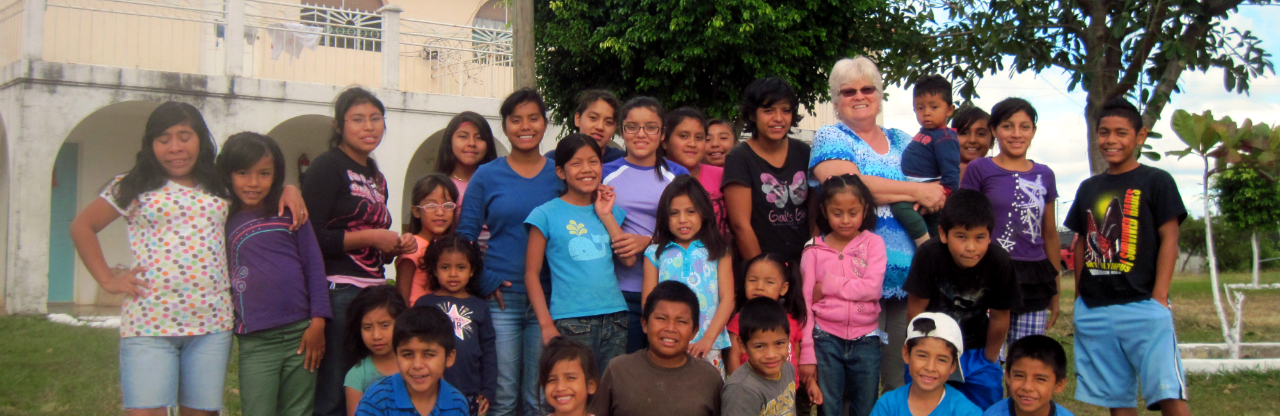
Children come to Shadow of His Wings and experience the love of a family and then are taken out just when they are adapting and adjusting to a family lifestyle.
The CNA, Guatemala’s National Adoption Agency, visits these Homes frequently. Their information could easily be passed onto the Children’s Court judges, assuring the family lifestyle model prevails. A clearer explanation of the terms Homes and Institutions should be provided for all involved in child rescue and care. Allowing more time for the required investigation can only help a child developmentally when in a safe and loving place. Using the facilities available keeps the children off of the streets and from gang involvement, sexual abuse and drugs. Problems are deeply rooted and much time needed to make the childcare system in Guatemala work better, but collaboration and communication between those involved make a difference in the lives of many children.
1 https://www.unicef.org/cambodia/12681_23295.html
Like this:
Like Loading...


 We stood in the cool breeze shaking our heads. Didn’t the kids finish the school term a few weeks ago? We continued to ride the zip line of time and today was the first day at Liberty Christian School. The director, Carina Aguilar, took up the theme that the children were blessed to have an opportunity for education. That went over the heads of many. I thought about the freedom they inherited to be able to attend school. People paid for that freedom with their blood, sacrifice, and through tribulation. My prayers went up that the population present at this open ceremony would see and feel the depth of the word “blessed.”
